Thirteen Years Borrowed
You can posses people for a day. For the past thirteen years, you have been looking for your original body.
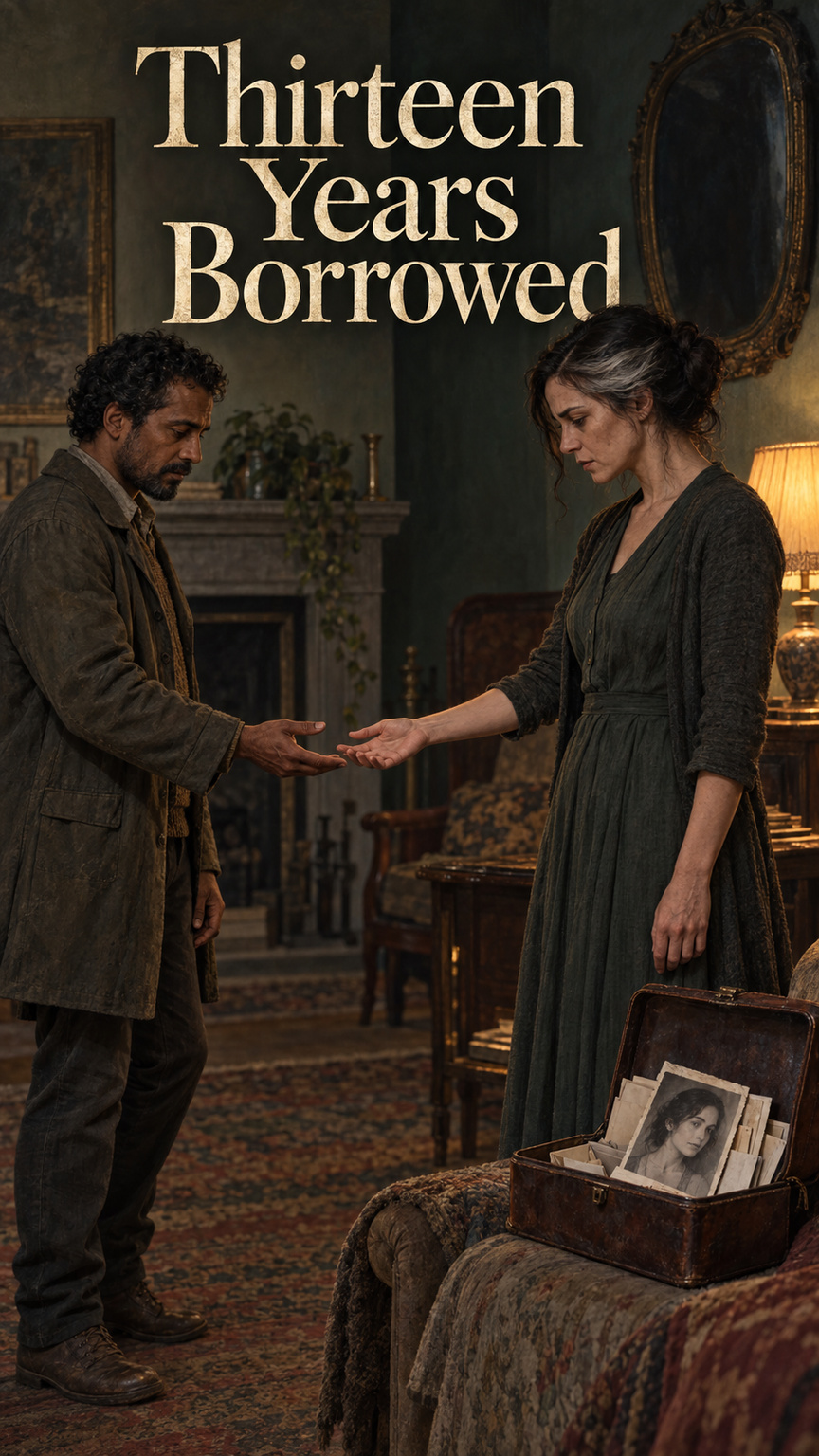
At midnight, Calo made me repeat the terms while the woman carrying me held his wrist.
“Front step to front step,” he said. “I walk up as myself. You can use my voice after I say we’re inside. My hands stay mine unless I lend them.”
The woman’s thumb trembled against the pulse in his wrist. She had carried me all the day just ended and had slept perhaps an hour. Her mouth tasted of burned coffee. In the thirteen years of my search, I had learned that gratitude was easier to feel than to inhabit. Bodies complicated it. A blister, a sour stomach, a child waiting at home—every kindness arrived with its own weather.
“No touching Nivra through me,” Calo said.
“Unless she asks.”
“Say the rest.”
“If you revoke, I stop.”
“How fast?”
I had lied about that once, seven years earlier, because the truth sounded selfish. “As fast as I can.”
Calo looked at the woman. “You ready?”
She nodded.
He turned his palm upward. I felt his acceptance before skin met skin: not warmth or welcome, but a space deliberately unlatched. I crossed.
For one blank instant there was no body at all. Then Calo arrived around me—his cramped left calf, the grind in his right knee, the dawn chill under his cuffs, hunger turning the back of his tongue metallic. His heart struck once hard enough to jar my count.
The woman let go. She sagged against the gate, herself again.
I tried Calo’s fingers. They curled half an inch.
No, he said inside us.
I released them.
“Good,” Calo said aloud, using his own mouth. “Case.”
The woman passed him the square relay case that had traveled through eighty-six hands in three years. Its corners were bright where the leather had worn away. Inside lay my routes, my dates, drawings of a face thirteen years younger, and the scraps of fact that had kept me moving after facts stopped resembling hope.
Calo tucked it under his arm. The woman asked whether I was settled.
“She’s counting my teeth,” he said.
I had been. One crown at the back, a nick in the left incisor, pressure under the lower gum.
“Not teeth,” I said through him, after he opened the voice to me. “Inventory.”
“That is not better.”
The woman laughed once, too tired to make more of it, and went home.
Calo slept on a station bench until the first tram began running. He kept the joints; in sleep, his permission narrowed by habit, and I counted the lamps reflected in the dark glass. By the time the shutters began to rise, Nivra lived forty-three minutes away if Calo took the direct tram and did not stop.
We stopped after six.
He turned us into a bakery as its shutters came up. I pushed toward the street. His legs halted so abruptly that the case swung into his hip.
We agreed, I said.
We agreed I’d get you there. We did not agree I’d faint on her rug.
“The next tram—”
“There’s always another tram.” He ordered two egg rolls and something black and hot. “You want sugar?”
“I don’t eat.”
“You’re eating today.”
He was right. That was one of the humiliations of borrowing: I did not inherit skill or memory, but I inherited blood sugar. He bit into the roll before it had cooled, burned the roof of his mouth, and swore around the food.
“You always do that?” I asked.
“Only when somebody is trying to march my legs out the door.”
“I didn’t march.”
He chewed. The answer was the chewing.
I counted the minutes on the wall clock. Thirty-seven until the next tram. Sixteen hours and nine minutes until midnight. Thirteen years since I had awakened behind a stranger’s eyes with no idea where my own had gone.
Calo finished both rolls. He gave me the last swallow of coffee as if lending a tool, loosening his throat and tongue but not his hands. It was too bitter. I tasted it twice anyway.
“Nivra hates sweet coffee,” he said.
“So did I.”
He wiped his mouth. “That wasn’t a test.”
Everything was a test. I simply no longer said so.
On Nivra’s street, Calo slowed. His knee had warmed into a thick, needling ache. The houses were narrow and practical, their front steps scrubbed clean, their windows open to the mild air. Nothing in the street had the decency to look like the end of thirteen years.
At the third house from the corner, he stopped at the gate.
I walk up, he reminded me.
I folded myself away from the joints. It was a learned posture, not quite stillness: present behind every sensation, absent from intent.
Calo climbed four steps, favoring his right leg. He had just lifted his hand when the door opened.
My face stood there.
Not the face from the drawings. That one had been thirty-one, narrow from a winter of poor work and worse meals. This face was forty-four. A line had settled between the brows. Silver threaded the hair above the left temple. The mouth was fuller than I remembered because Nivra held it differently.
She leaned her weight onto the left foot. When the loose door tile tipped beneath her heel, her right hand opened to counterbalance, two middle fingers lagging behind the others.
Mine. The tendon damage had happened when I was nine.
I drove Calo’s body forward.
His right knee locked. His shoulders jerked back so hard the case fell and struck the step.
Stop.
I fought him for one breath. Calo forced both hands flat against his thighs. He left me the eyes.
Nivra watched his face change around us. Her damaged knuckle whitened on the edge of the door.
“Calo,” she said.
“Still me.” His breath came short, partly from the struggle, partly from the stairs. “She pushed.”
“I saw.”
I could have apologized through his mouth. He had not opened it to me.
Nivra looked at the relay case on the step, then at Calo’s fixed hands. “Come in when you can walk.”
She left the door open and moved away.
Calo waited. Eight breaths. Ten. His heart slowed under me.
I’m sorry, I said.
Not useful yet.
He bent, picked up the case, and climbed the final step.
Inside, the house smelled of toasted fennel and damp clay. Three bowls sat upside down beside the sink. A green coat hung from a peg lower than I would have chosen. On the table, Nivra had set out bread, soft cheese, a crock of chopped herbs, and two cups. She brought a third from the shelf without asking whether a person without a body counted as a guest.
Calo sat. Nivra took the chair opposite him and reached for the fennel bread.
My old body had despised fennel. The smell used to cling to the back of my throat like medicine.
Nivra tore off a corner and ate it with pleasure.
“Can I speak?” I asked inside.
Calo opened his voice.
“The scar under your left arm,” I said. “It’s shaped like—”
Nivra put down the bread. “No.”
“I need to know.”
“You know.”
“The knuckle could be in the letters. The hand—Calo could have described that. If I see the scar—”
“You sent a drawing of it to half the coast.”
“Then tell me what I broke it on.”
She looked at Calo, not me. “Is she using your hands?”
“No.”
“Good. Eat something.”
He spread cheese on bread. I waited through one bite, then two.
“When did you first wake?” I asked.
Nivra pinched herbs onto her cheese. “The fourth morning after they found this body breathing.”
“Where?”
“In a room with blue walls.”
“Who found it?”
“That’s in the records.”
“What did you remember?”
“Light. Thirst. Someone lifting my eyelid.”
“Before that.”
“Nothing I can give you.”
“A road? A room with a red floor? A woman wearing copper rings?”
Nivra ate another bite.
I heard my own breath quicken through Calo. “Did you know the song about the fox and the barley?”
“No.”
“Could you write?”
“Not on the fourth morning.”
“When?”
“Later.”
“How much later?”
“I signed the name Nivra after eleven months. I chose the green coat six years ago. I started helping at the kiln in the ninth spring. I stopped sleeping with a lamp on three winters ago. Dates enough?”
They were dates. They had edges I could copy into a ledger. They did not tell me where she began and I ended, or whether that question described anything real.
“The scar,” I said again.
Nivra stood and carried her cup to the sink.
Calo closed our mouth.
You’re doing it again, he said.
Doing what?
Making her prove she’s your missing parcel.
You brought me here because you believed she was.
I brought you because I promised both of you one meeting. His fingers tightened around the bread. I did not promise the meeting would go your way.
At the sink, Nivra washed a perfectly clean spoon. Her left shoulder rose before the right, a habit I had never had. She dried the spoon, returned it to the drawer, then shifted the three bowls until their rims aligned.
I wanted the hands that had invented that useless order. I wanted the lagging fingers and the old scar. I wanted to wake tomorrow without a stranger’s hunger waiting for me.
Calo pushed back from the table.
“Where are you going?” Nivra asked.
“Washroom.”
“Back hall. The latch sticks.”
He collected the relay case.
“Leave that,” I said before he shut the voice.
“No.”
In the narrow washroom, he locked the door and sat on the closed lid. Sweat had cooled under his collar. His knee throbbed. I had missed both facts while watching Nivra.
I can walk out, he said.
We haven’t finished.
You haven’t started. You’re checking inventory.
I searched for an answer that would open him and found only the old ones: the miles, the wrong bodies, the people who had said yes and regretted it before noon. “I need—”
Not with my mouth.
He took it back.
For several minutes we listened to the pipe tick. A cart rattled past outside. Calo stretched his bad leg into the tiny space between toilet and wall.
When he unlocked the door, Nivra was waiting in the hall with a folded hand towel.
“You left this yesterday,” she told him.
“Knew where it was.”
“That explains why you searched the kitchen.”
“Checking whether you moved it.”
She handed it over. He tucked it into his coat pocket. No one interpreted the exchange for me.
Back at the table, Nivra opened the relay case. She did not ask permission. The papers showed her younger face from four angles: smiling, squinting, annoyed with the artist. Mine, then. Not hers, though the distinction trembled if I looked too long.
She turned past thirteen years of routes. “You were three streets away in the second year.”
“For half a day.”
“I was still learning stairs.”
“The records said the body died.”
“It nearly did.” She touched a page where I had written that false ending in black ink. “On the eighth day, I pulled out the feeding tube. On the twelfth, I said water. They wrote those down. It took them nine months to stop calling each thing a reflex.”
“I didn’t know.”
“No.”
The single word had no mercy in it, but no accusation either. A date. A consequence.
Nivra closed the case. “I’ll let you enter once.”
Calo’s heartbeat kicked.
“Today?” I asked.
“At eleven-thirty. Observation first. Movement if I choose. If I revoke, you leave before midnight.”
“And if I can stay?”
She rubbed the damaged knuckle. “Then we’ll know what it costs.”
Calo stood too quickly. Black motes washed across our sight. He gripped the table until they cleared.
“Sit down,” Nivra said.
“I’m fine.”
“You’re gray.”
“That’s my face.”
“Your face is brown.”
He sat.
The hours until eleven-thirty did not behave like the final hours of a search. Calo slept for forty minutes on Nivra’s sofa with his sore knee propped on a cushion. I remained awake inside the discomfort, listening to a neighbor hammer something badly. Nivra went out and returned with lentils and lamp oil. She cooked. She hummed no song I knew.
At dusk, she dropped a wooden spoon. Her right hand snapped down, fingers spread, and caught it against her thigh before it hit the floor.
I had learned that catch from my older brother, though not from his teaching. He used to throw nutshells at me while I read. My hand had learned before I did.
Nivra stared at the spoon pressed against her skirt.
“That one wasn’t in the letters,” I said.
“No.”
She rinsed it and went on stirring.
The lentils needed salt. Calo told her so. She told him his mouth had been ruined by pickles. They argued for three ordinary sentences, then he added salt to his own bowl. I tasted the meal through him: earth, fennel, too much pepper. Nivra gave us the heel of the bread because Calo liked it.
At ten, someone knocked twice at the back door.
Nivra admitted a short woman in a rain cape. The volunteer did not give me her name. That was sensible. She had agreed to wait in the kitchen from eleven-fifty until midnight and, if I came to her, to carry me tomorrow. No more.
“Tea?” Nivra asked.
“If it’s already made.”
It was not. Nivra made it anyway.
At eleven-twenty-eight, Calo stood facing her in the cleared sitting room. The volunteer waited behind the closed kitchen door. The relay case lay beside the sofa. One lamp burned. Rain whispered against the front windows.
Nivra held out her hand.
Calo did not lift ours.
Your choice, he said.
For thirteen years the choice had been onward. Thirteen heartbeats, one offered hand, no time to consider whose joints would ache the next morning. I had made rules because rules were the nearest thing I had to a body: limits I could point to and say, this is where I end.
I raised Calo’s hand halfway. He allowed that much, then stopped.
“May I?” I asked aloud.
Nivra looked at our suspended hand. “Observation. No movement.”
“Yes.”
Calo completed the reach.
Skin met skin.
The passage opened, and for the first time in thirteen years I did not cross into foreign weather.
I came home to an ankle that remembered breaking, a jaw that clicked on the left, lungs with more room than Calo’s. A fiber of bread caught between the same two molars where food always had. The damaged fingers buzzed faintly. My heart—her heart—beat slower than I expected.
Nivra surrounded me not as memories, not as thoughts I could read, but as resistance with shape. She held the eyes. She held the hands. I could feel which movements she considered before she made them, small currents gathering behind muscle, but not why.
Calo staggered back into himself. He caught the sofa arm and swore. Nivra turned her head toward him. I only went with her.
“Calo?” she asked.
“Here.” He sat heavily. “Knee’s worse.”
Nivra took one step toward him, then stopped. Still only watching, she said inside our head. Her inward voice was lower than the one air made.
Yes.
She lifted our hand. Turned it palm up. Closed it.
The motion was hers, but the fit of it broke something open in me. No translating the length of a stranger’s fingers. No compensating for a shoulder broader than intention. I knew where the hand would end before it moved.
Nivra touched the old scar beneath our arm. This?
A roof nail. I was twelve.
It aches before rain now.
She lowered the arm. The rain kept speaking at the glass.
At eleven-forty-three, she lent me the left hand.
I opened and closed it. The middle fingers lagged. I pressed the thumb to each fingertip, once, twice, faster. Nivra withdrew the hand.
Enough.
Please. Both hands.
Silence.
Calo watched from the sofa, jaw tight with pain. “Time,” he said.
Eleven-forty-eight.
Nivra gave me both hands and the mouth. “Water,” I said.
Calo pointed to the table. “Left of the lamp.”
I picked up the cup. Too much force; water jumped over the rim. Nivra corrected our wrist. Together we drank. She preferred smaller swallows than I did.
At eleven-fifty-two, she gave me our legs.
I stood. The right ankle rolled inward, as it always had. Nivra tightened a muscle I did not remember learning to use, and we steadied. I walked once across the rug. Fourteen steps to the window. Fourteen back.
The body was not preserved. It had gone on without me and become more exact in someone else’s keeping.
At eleven-fifty-six, I felt the anchor.
It was not a voice or a revelation. It was the simple absence of distance. Every other host held an inner door, and beyond it midnight waited with its thirteen blows. Here, when I pressed deeper, the door became mine.
Nivra stumbled.
What did you do?
I don’t know. That was a lie. My hands—our hands—had stopped shaking.
Calo leaned forward. “Nivra?”
She tried to answer aloud. I kept the mouth.
Not deliberately at first. Then deliberately.
The kitchen door opened a crack. The volunteer stood beyond it, one bare hand ready.
Inside us, Nivra pushed for the right arm. I held it still. She pushed for the jaw, the eyes, a toe. Each refusal made my ownership cleaner. Her inward voice lost its weight in the muscles and moved behind me, toward the place from which I had spoken for thirteen years.
Stop, she said.
I closed our left hand. Mine. I lifted it to the lamplight. Mine.
Nivra’s next word came faintly. Calo.
He rose despite his knee. He did not come closer. “Let her answer, Tamaris.”
“I heard.” My voice from my throat. Older, roughened, real.
“Then let her.”
Eleven-fifty-eight.
I could stay. The knowledge sat in the body more surely than any rule I had written. Hold every hinge shut through midnight and I would wake here tomorrow. Nivra would wake elsewhere, if the waiting hand reached her in time. After that: thirteen heartbeats, promises, borrowed hunger, the next name in a relay case.
The cost was not death. That made it harder.
I walked to the mirror above the cold fireplace. Silver at the temple. A faint burn mark on the chin that I had not put there. Nivra’s green coat reflected from its low peg behind me.
I had imagined this face in sleep I could not own. I had spent four thousand seven hundred and forty-eight mornings opening unfamiliar eyes. Routes. Terms. Counts. All of it narrowing to the woman behind mine, unable now to lift one finger.
I need— I began.
The words would not finish.
From far inside, Nivra gave me the only thing she still controlled: no answer.
At eleven-fifty-nine, I opened the right hand.
Nivra seized it. She opened the left herself, dragged air into our lungs, bent our knees. Control returned to her unevenly, like blood to a sleeping limb. She lurched away from the mirror and caught the mantel.
“Kitchen,” Calo said.
Nivra made no promise. She got us there.
The volunteer stepped into the doorway. Nivra lifted our hand toward hers, but the arm shook halfway up. I could have helped. I did not touch the movement.
The last second gathered.
Midnight threw me out.
One heartbeat: no body.
Two: the room without sight.
Three: a hand somewhere before me, offered.
Four, five: I reached without muscle.
Six: skin.
Seven: acceptance.
I crossed.
The volunteer’s knees buckled. Calo caught us under the arms, bad leg skidding, and Nivra caught our wrist. For an instant all three bodies were joined by the effort of keeping one upright.
Then the volunteer straightened. She kept the hands.
“Chair,” she said.
Calo pulled one out with his foot. She sat. Through her I felt wet socks, a tight braid, tea cooling in her stomach. New weather.
Across the kitchen, Nivra leaned against the table in my original body. Her face had gone pale. She flexed the damaged fingers once. Twice.
The relay case remained by the sofa in the other room, still holding thirteen years of routes.
Calo rubbed his knee. “Anybody want the rest of the lentils?”
Nivra shook her head.
The volunteer opened her mouth to answer, then waited for me.
“Water first,” I said.